

At some point, every African abroad discovers the same painful thing.
You can go back to the country that made you.
But that does not mean you are going home.
For years, the difference is invisible. Going back and coming home look exactly the same. Same airport. Same suitcase. Same mother waiting at arrivals. Same heat pressing against your face before you even leave the terminal. Same food on the table when you get in. Same old bed. Same family shouting your name like you have only been gone for a weekend.
And because it feels familiar, you believe it.
You tell yourself, I am home.
Then one day, usually over something small, the lie breaks.
Someone mentions a name you should know.
You smile like you know it.
You do not know it.
Everyone else does.
That is when you realise home has been happening without you.
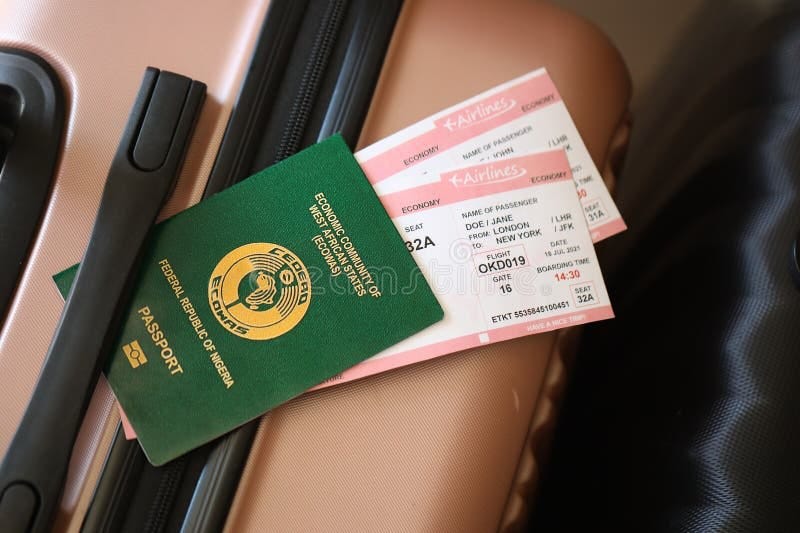
The airport lies
The first few days back are always dangerous because they convince you nothing has changed.
You land at Murtala Muhammed at night. Lagos is loud before you even reach the car. The air is hot, wet, rude, alive. The immigration officer looks at your passport, looks at you, and says, “Welcome, sir.”
Something in your chest relaxes.
Outside, the city is exactly dramatic enough to make you believe in belonging again. Third Mainland Bridge. Oworonshoki. Brake lights. Petrol. Pepper. Grilled fish. Dust. Someone selling plantain chips between lanes. A billboard for some new bank, some new estate, some new version of Nigeria promising to fix itself by December.
You crack the window.
You breathe it in.
You think, yes.
This is me.
At home, your mother has cooked like you are returning from war. Jollof. Fried plantain. Stew. Pounded yam wrapped and waiting. More food than any reasonable person could eat, because mothers do not cook for appetite. They cook for absence.
She hugs you too long.
Your sister pretends not to cry.
Your cousins are loud. Someone is playing music. Someone has brought drinks. A generator is humming in the background like it, too, remembers you.
For a few days, you are restored.
You sleep in your old bed. You eat food you did not have to explain to anyone. You hear your name pronounced properly. You sit in rooms where nobody needs your origin story. You feel, for the first time in months, like a complete person.
This is the trap.
Because what you are feeling is not proof that you are home.
It is proof that you miss it.
Those are not the same thing.
The moment it breaks
It usually happens casually.
Your cousin says, “You remember Tunde now? He just moved his mother to Lekki.”
You nod.
You smile.
You say, “Ah, that’s big.”
You have absolutely no idea who Tunde is.
So you start searching your memory. School? Church? Family friend? Football? Someone’s younger brother? One of the boys from the street?
Nothing.
But your cousin remembers him. Your sister remembers him. Your mother remembers him. Everyone remembers him.
And suddenly you understand.
There is an entire version of home that continued without your permission.
People got married. People died. Babies were born. Friends became strangers. Strangers became family. Your parents built routines without you inside them. Your siblings became adults in ways you did not witness. The street changed. The jokes changed. The names changed.
Nobody pushed you out.
Time did.
That is the part that hurts.
There was no argument. No betrayal. No dramatic exile. No one said you no longer belonged.
You simply left.
And while you were building a life somewhere else, home built one too.

Achebe knew
Chinua Achebe wrote this wound before most of us knew we would inherit it.
In No Longer at Ease, Obi Okonkwo leaves Nigeria for England. He studies. He returns educated, polished, changed. On paper, he has done everything right. He is the success story. The son who left and came back with something to show for it.
But success does not save him.
Because the real problem is not that Obi went abroad.
The real problem is that when he returns, he no longer fits cleanly anywhere.
England does not belong to him.
Nigeria does not receive him unchanged.
He is too foreign for home and too African for abroad. Too local there, too altered here. Too much of both places. Fully at ease in neither.
Obi’s problem is not unique to colonial Lagos; it is the permanent condition of many Africans who leave and try to come back.
That is the oldest diaspora problem.
Not poverty.
Not distance.
Mismatch.
The strange feeling of becoming impressive in one world while becoming slightly unfamiliar in the one that raised you.
Most of us do not want to admit we are Obi.
But we are.
We left to become more useful, more powerful, more educated, more mobile, more free.
And then one day we came back and realised freedom had a cost.
The cost was ease.
The first thing leaving takes
The first thing leaving takes is not your accent.
It takes your timing.
You start missing things.
At first, small things. A birthday dinner. A Sunday lunch. A cousin’s engagement. A random evening where everyone ended up at your mother’s house and laughed about something you will only hear about later.
Then bigger things.
Weddings. Funerals. Births. Surgeries. Graduations. The kind of moments families use to remember who showed up.
You always have a reason.
The flight was expensive.
The client meeting moved.
The visa was delayed.
The project was closing.
The timing was impossible.
And most of the time, the reason is real.
That is what makes it worse.
You are not lying.
You are not careless.
You are not wicked.
You are simply absent.
And absence, even justified absence, still accumulates.
Then it takes the voice
After timing, it takes the accent.
Not all at once. Just a little. A vowel changes. A rhythm flattens. You start saying things the way people say them where you live now because repeating yourself became tiring.
Then one day an aunty laughs and says, “Ah-ah, you don turn oyinbo.”
Everyone laughs.
You laugh too.
But something has been marked.
Then it takes the language.
Not the whole language. Just enough to humiliate you privately. You pause in the middle of a sentence, reaching for a word you used to know without thinking. The word is there, but behind glass. You can see it. You cannot reach it fast enough.
That pause is the grief.
Everybody hears it.
Nobody says anything.
Then it takes the names.
The cousin you used to see every Christmas is now someone you recognise from Instagram. Your uncle’s new wife has a name you have asked for twice. The baby born two years ago is still “the new baby” in your head. Your friend got married and you watched the reception from stories. Someone from the old street died and you found out three days later in a family group chat.
This is how leaving works.
It does not steal your home in one dramatic moment.
It makes you slightly late to everything until lateness becomes your role in the family.
WhatsApp is not presence
This is where the diaspora lies to itself.
We think because we call, we are there.
We think because we send money, we are there.
We think because we reply in the group chat, comment under the pictures, send the birthday voice note, and wire something for the funeral, we are there.
We are not.
We are involved.
That is different.
Money is not presence.
A video call is not a chair at the table.
A voice note is not your hand on your mother’s shoulder.
A bank transfer is not the same thing as standing beside your brother at the burial.
These things matter. Of course they matter. Sometimes they are all we can do. Sometimes they are love doing its best across distance.
But they are not the same.
And some part of your family knows they are not the same.
They may never say it.
Because they love you.
Because they are proud of you.
Because they know you left for a reason.
Because they do not want to make your life harder.
But they know.
And so do you.
The actual bill
The bill is not dramatic.
That is why it is easy to ignore.
You missed your sister’s thirtieth because of a site visit in Abidjan. She said it was fine. You told yourself it was fine.
It was not fine.
You watched your mother recover through a phone screen because your flight was the next morning. Your aunty held up the phone. Your mother smiled. You smiled back. You told her you loved her.
Then you hung up and went to the meeting.
The meeting went well.
That is the part that makes it cruel.
Your father called at ten in the morning on a Tuesday. You were in a pitch. You texted, “In a meeting, call you later.”
You called back four hours later.
He said it was nothing.
It was nothing.
But he is older now. And you were in a pitch. And the next pitch is always coming. And one day the call will not be nothing.
This is the bill.
Not one great tragedy.
A slow leak.
Birthdays you joined by FaceTime. Weddings you watched through someone else’s shaky phone. Funerals you sent money to. Children who know you first as a voice message. Parents whose ageing you witness in pixels.
The diaspora does not only separate you from a place.
It teaches the people you love how to need you less.
They are adjusting to your reality the only way they know how: by learning to hold their crises, their joys, their boredom, without expecting you in the room.
The version of you that stayed
There is another person in this story.
The version of you who never left.
You think about him sometimes.
He speaks the language better than you. He knows the streets better than you. He knows the current slang. He knows which road to take when traffic misbehaves. He can enter a market without being priced like someone who just landed. He does not have to perform localness because he never stopped being local.
He is not better than you.
But he belongs with less effort.
And effort is the thing you notice now.
You notice yourself trying.
Trying to sound normal.
Trying to remember names.
Trying to follow jokes.
Trying not to ask stupid questions.
Trying not to look too impressed by things everyone else considers ordinary.
Trying not to become the person who says, “Back in London…”
Trying not to be foreign in your own house.
That is when you understand what leaving has done.
It has not made you an outsider.
That would be simpler.
It has made you almost an insider.
Almost is worse.
The trade was real
Now, be honest.
Leaving gave you things.
It gave you rooms you might never have entered. It gave you language for power. It gave you discipline. It gave you perspective. It gave you a way to see your country clearly, sometimes more clearly than you could when you were inside it.
It gave you access.
Capital.
Confidence.
Range.
It taught you how systems work elsewhere. It taught you what is possible. It taught you what home deserves. It may even give you the tools to build something back home one day.
So this is not an argument against leaving.
Leaving may have saved you.
Leaving may have fed your family.
Leaving may have made the future possible.
But we have to stop pretending it was free.
You gained things that mattered.
You lost things that mattered.
Both are true.
The maturity is not choosing one truth and deleting the other.
The maturity is carrying both without lying.
How to know if home has become a place you visit
You cannot answer this by feeling bad for five minutes.
Guilt is lazy.
You need evidence.
So write down the last five major family events.
Weddings. Funerals. Births. Surgeries. Graduations. Milestone birthdays. The moments people remember.
Now write what actually happened.
Not what you planned.
Not what almost happened.
Not what would have happened if the ticket was cheaper or the meeting moved or the visa came through or the timing was better.
What actually happened.
How many did you attend in person?
How many did you join by phone?
How many did you miss and apologise for later?
Do not round up.
Do not give yourself credit for intentions.
Intentions do not appear in family photos.
If the number is low, it does not mean you are a bad son. It does not mean you are a bad daughter. It does not mean you do not love your people.
It means your life has a cost.
And the cost has a name.
Absence.
The question is not whether you are paying it.
You are already paying it.
The question is whether you are paying it on purpose.
Because sacrifice and drift can look very similar from the outside.
Same airport pictures.
Same calendar.
Same “just landed” posts.
Same career updates.
But sacrifice is chosen.
Drift just happens.
One is a life.
The other is a current.
Home is not a memory
Here is the thing Achebe understood.
Home is not something you own forever because you were born there.
Home is not a certificate.
Home is not a passport.
Home is not your mother’s address.
Home is not the fact that you still know the chorus to an old song or can name the street you grew up on.
Home is a relationship.
And relationships weaken when they are not tended.
The country you left will not wait for you. Not because it is cruel. Because it is alive.
Lagos will keep moving.
Accra will keep moving.
Nairobi will keep moving.
Abuja, Kampala, Kigali, Johannesburg, Freetown, Dakar.
They will all keep moving.
The streets will change. The people will change. The jokes will change. Your parents will change. Your siblings will change. You will change.
And one day you will return to a place that still loves you but no longer needs you in quite the same way.
That is not betrayal.
That is time.
You can go back.
You can visit.
You can invest.
You can build.
You can even move back.
But you cannot unleave.
No longer at ease
Obi Okonkwo did not know how to be at ease in either of his worlds.
Achebe called that a tragedy.
We call it a career.
Maybe we are wrong.
Maybe success abroad is not the problem. Maybe distance is not even the problem. Maybe the problem is pretending nothing has changed when everything has.
We left home to become something.
Some of us became it.
But while we were becoming, home became something too.
And now the work is not simply to return.
The work is to rebuild ease.
Call before there is bad news.
Visit before there is a burial.
Learn the names before the children become adults.
Ask the boring questions before they become impossible.
Send the money, yes.
But do not confuse money with yourself.
Your people do not only need what you earn.
They need the person earning it.
The diaspora gives.
The diaspora takes.
The least we can do is stop acting surprised when the bill arrives.

So go home
Go home.
Not forever.
That is a different conversation.
Go home more deliberately.
Go home before guilt is the only thing strong enough to move you.
Go home when nobody is getting married.
Go home when nobody is sick.
Go home when there is no funeral, no emergency, no December performance, no big event to optimise around.
Go home for ordinary days.
Because ordinary days are where belonging lives.
Sit in your mother’s kitchen. Let her tell you stories about people whose names you have forgotten. Ask your father the questions you keep postponing. Learn the children’s names. Let your language come back badly before it comes back well. Stay long enough for the visit to stop feeling like a visit.
Go home for a week, not a weekend.
Go home and be bored.
Boredom is part of belonging.
You cannot maintain home only through crisis.
You cannot keep a relationship alive only by appearing for the dramatic scenes.
You have to show up for the quiet ones too.
Talk soon,
- Kaykluz
P.S. I wrote most of this on a flight. The fact that it took a flight to write about not flying home enough is either deeply ironic or exactly what I deserve.
P.P.S. My mother is fine. She asked me to tell you that. She also wants me to remind you to call your own.
P.P.P.S. If you are reading this on a layover, close the laptop. Call somebody. This piece will still be here when you land.
How can I dislike this? Why do you have to do this to us? Raising the melancholy we try to act like it doesn't exist. Someone cannot be in denial in peace? :(
Okay, I will go home.... 😔