

I have not published anything here in a while.
It is not because I had nothing to say. I had several drafts. Some half-angry, some half-useful, some better left in the drafts folder because not every thought deserves daylight. But the honest reason is much dumber and far less intellectual.
Arsenal.
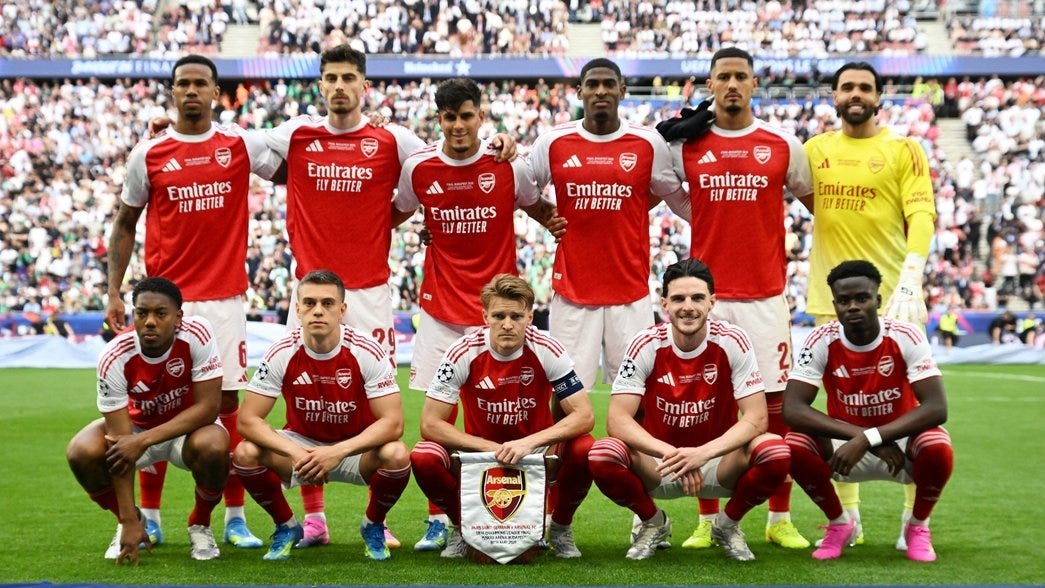
I apologise in advance if this is not what you expect on a blog that pretends to be about clean energy, infrastructure, and the general comedy of trying to sound serious while figuring life out in real time. But Arsenal is an undeniable part of me. It has been since before I knew what a passion was. Before I could explain a balance sheet, a levelised cost of energy, or why “just add batteries” is not a project development strategy, I knew Arsenal. I have been with this club through the lows, the almosts, the banter years, the “next season” sermons, the painful hope, the rebuilds, the false dawns, the late winners, the collapses, and the strange emotional violence of believing again.
So the last few weeks have been consumed by Arsenal. I have a defence. A very good one.
Ten days ago, after twenty-two years, Arsenal were confirmed Premier League champions for the first time since the Invincibles in 2004. Not the FA Cup. Not a Community Shield argument on Twitter. The league. The thing. The one I had waited for since childhood. And then last night happened. We reached our first Champions League final since 2006, took the lead through Kai Havertz in the sixth minute, and lost it to Paris Saint-Germain on penalties after Eze and Gabriel both missed from the spot. PSG won the coin toss to take the shootout in front of their own supporters, and you could feel the air change. Twenty years of waiting and a season of brilliance, and at the very end it comes down to which way a coin lands and whether two penalties go in.
I am still sitting with that.

But this post is not about Arsenal.
The point is the other thing, the one percent of my brain that kept ticking away underneath while the other ninety-nine percent calculated Champions League final permutations like a deranged actuary.
That one percent has been chewing on a single idea:
Thinking and communication may become the most valuable skillset of this century.
Thinking. Communication. And the ability to fuse both with real knowledge of a field that matters.
That sounds obvious until you sit with it. Because we are living through a moment where intelligence itself is being industrialised, and somewhere inside that, a seventeen-year-old, a university fresher, a junior engineer, and a parent trying to advise their child are all asking the most reasonable question in the world. So what should I actually learn?
I have been asked some version of this more times than I can count, and I want to be honest about something. The more confidently I answered, the less I believed myself.
Let me build the stage first.
The biggest pile of money in the history of money
We are living through the largest capital mobilisation of our lifetimes, possibly of any lifetime. I do not say that for effect. The numbers are genuinely hard to hold in your head.
Three days ago, Anthropic closed a round at a 965 billion dollar valuation, eclipsing OpenAI and arriving, almost theatrically, at the doorstep of a trillion dollars. Let us not insult mathematics by pretending 965 billion is far from a trillion. This is a company that did not exist six years ago, founded by people who walked out of OpenAI because they thought it was moving too fast. For perspective, it took Alphabet roughly sixteen years from its 2004 IPO to cross a one trillion dollar market cap, which it finally did in January 2020. One is a private valuation and one is a public market cap, so it is not a clean comparison, but the direction of travel is the whole story.
Anthropic is approaching that neighbourhood in five years.
Five.
I have cooked rice longer than some AI companies have existed.

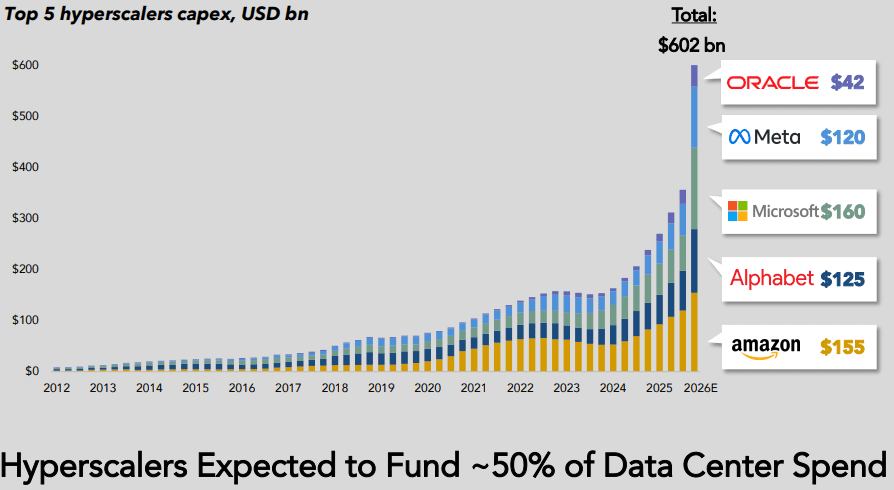
Zoom out from one company to the system. According to Stanford’s 2026 AI Index, United States private AI investment reached 285.9 billion dollars in 2025, more than twenty-three times China’s tracked figure, while global corporate AI investment hit 581.7 billion dollars, up roughly 130 percent in a single year. Then look at the concrete and copper. In 2026, the big five hyperscalers are on track to spend around 725 billion dollars on AI infrastructure, a figure that exceeds the entire annual GDP of Switzerland. And here is the stat that should reframe how you see all of it: in the first half of 2025, AI-related capital spending contributed more to United States GDP growth than all consumer spending combined. More than every shopper, every car, every dinner out, in the largest consumer economy on earth.
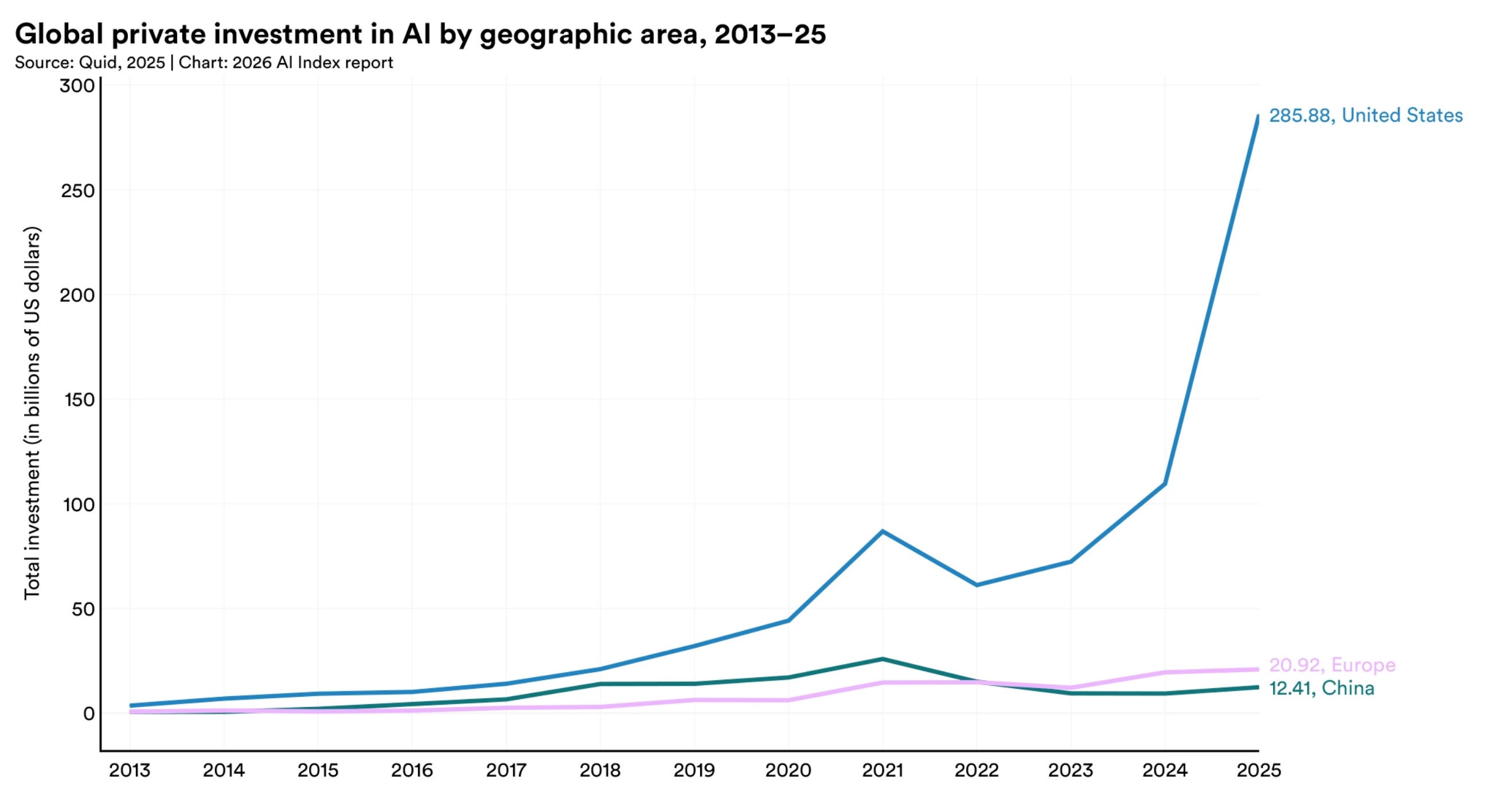
This is a capital war. Larry Page reportedly said he is willing to go bankrupt rather than lose this race. When founders talk like that, you are no longer in a tech cycle. You are in something closer to a national mobilisation.
And the ceiling people are imagining is absurd. Elon Musk’s SpaceX, having absorbed his AI company xAI, is targeting around 1.75 trillion dollars in an IPO that would be the largest in history. The investor Ron Baron, whose firm holds a roughly 15 billion dollar stake, went on CNBC and said SpaceX could be worth “10 trillion, 20 trillion, 30 trillion” over the next ten to fifteen years, and that he “could be very low.” His reasoning is the tell. He thinks the future is data centres in orbit, because, in his words, you get “free electricity and free cooling once you get into space.”
Read that last part again, because it is not a throwaway. The most bullish space investor on the planet is dreaming about leaving the planet, and the reason he gives is energy. Even the people imagining a thirty trillion dollar company cannot escape the constraint.
This is the world we are in. A five-year-old AI company valued like a nation. A data-centre build-out that commands more capital than the GDP of most countries. A model update that moves labour markets.
So, exciting. More money than ever, moving faster than ever, into the most powerful technology any of us has touched.
Here is the problem.
The money is not the jobs
The thing about all that capital is where it goes. Servers, data centres, networks, power systems, cooling. These assets are extraordinarily capital intensive. They are not labour intensive the way building a railway or a factory used to be. You do not need a hundred thousand people to run a hyperscale facility. You need a few hundred, and a lot of electrons.
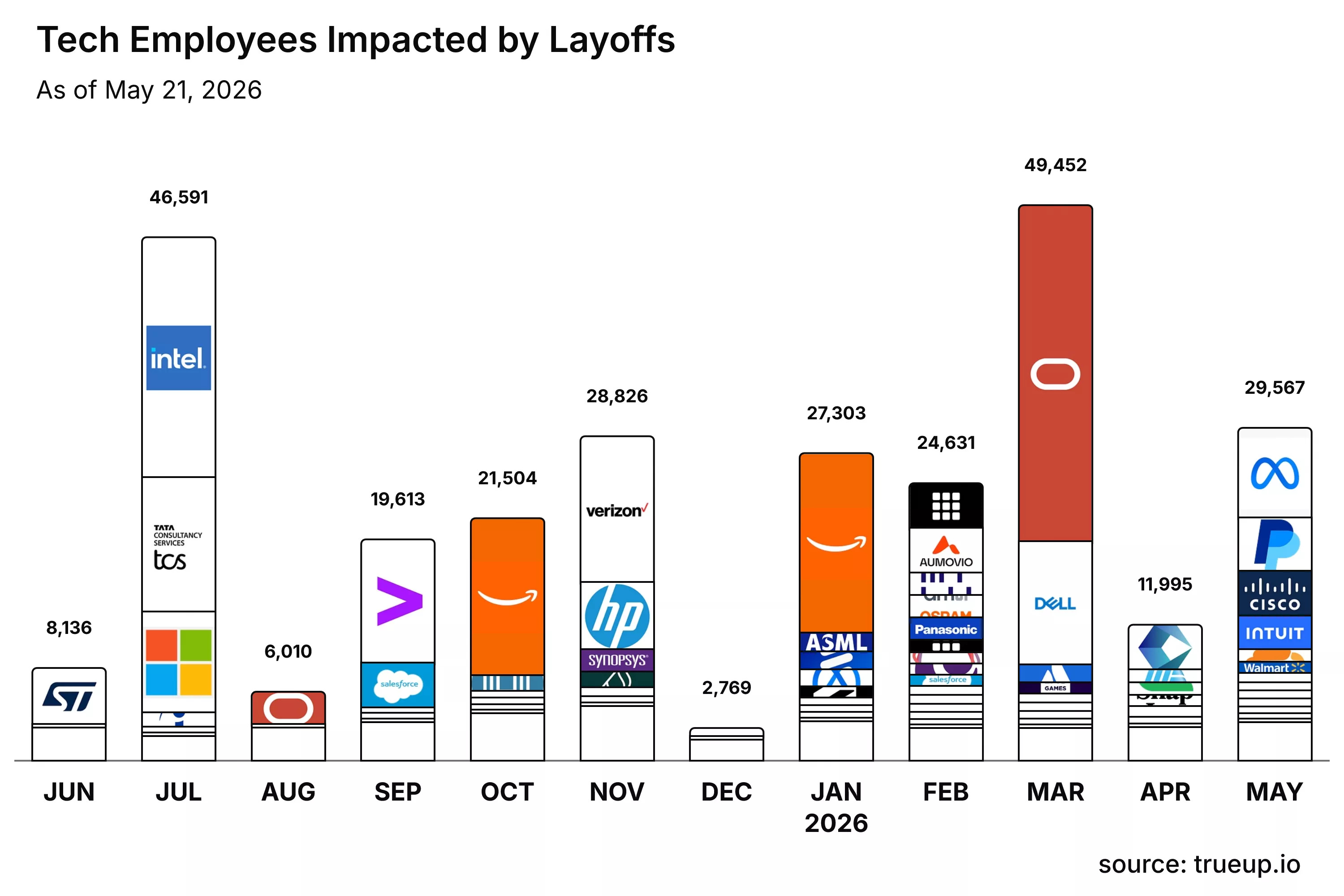
So the biggest investment boom in history is happening at the exact same moment as one of the strangest layoff cycles in history. In the first five months of 2026 alone, tech layoffs hit 142,000, putting the year on pace to approach 370,000, close to the post-pandemic record. And the part that makes your skin crawl is why. These are not struggling companies. Oracle cut around 30,000 roles shortly after strong earnings. Meta cut 8,000 people and closed 6,000 open roles specifically to free up budget for AI infrastructure. By March, AI was the single most cited reason for job cuts in the United States, accounting for a quarter of them. Profitable companies are firing people to pay for the machines that will let them need fewer people.
That is the loop. And it is real, and it is not slowing down.
So what do you actually tell a seventeen-year-old?
Here is where my easy answers fall apart in my hands.
For years my advice was simple and, I thought, bulletproof. Study engineering. Study mathematics. Study physics, economics, computer science. Anything that forces you to solve problems and builds your thinking muscles. Pick a hard technical discipline and the world will always have a use for you.
I still believe most of that. But the bottom of the ladder, the rungs I climbed, are the ones being sawn off first.
Dario Amodei, who runs the company whose product I am literally using to research this essay, spent last year warning that AI could wipe out half of all entry-level white-collar jobs and push unemployment to between 10 and 20 percent within one to five years, with finance, law, consulting and tech most exposed. This is not an outsider throwing stones. This is the man building the thing, telling you what it does. The IMF’s Kristalina Georgieva put it even more bluntly at Davos, calling AI’s impact “a tsunami hitting the labour market,” with about 60 percent of jobs in advanced economies and 40 percent globally set to be enhanced, transformed or eliminated.
And the early data is not arguing with any of them. Stanford’s AI Index found that employment for software developers aged 22 to 25 has fallen nearly 20 percent since 2024, even as their older colleagues’ headcount grew, with one in three surveyed organisations expecting to shrink their workforce over the coming year. The junior analyst job, the first-year associate job, the entry-level modelling job, the roles that were the training ground for everyone who is now senior, those are the ones being compressed hardest.
Which leaves a genuinely brutal question hanging in the air.
Nobody becomes a senior project finance professional by reading “Project Finance for Dummies” and asking a chatbot to explain DSCR. You become good by building messy models, getting yelled at politely by investment committees, realising your assumptions make no sense, fixing them, listening on calls, watching seniors negotiate, writing bad memos, then less bad memos, then eventually something a client can read without losing faith in humanity.
Nobody becomes a good energy engineer only by passing exams. You become good by visiting sites, smelling diesel fumes, watching a roof you modelled beautifully turn out to be structurally suspicious, and learning that commissioning is where Excel optimism goes to meet reality.
Entry-level work is not just labour. It is apprenticeship. If AI deletes the apprenticeship layer faster than we build a new one, we do not just lose jobs. We lose the pipeline through which judgment is formed.
That is the hidden crisis. Not unemployment alone. The quiet collapse of skill formation. I do not have a clean answer to it. Nobody does. Anyone who tells you they do is selling a course.
So I sat with it. And the more I sat with it, the more my instinct flipped into something that, on the surface, sounds like heresy.
The heresy: every serious field becomes more important, not less
Hear me out before you close the tab.
The standard story is that AI eats jobs one field at a time, and one by one they shrink and vanish. I think the truth is closer to the opposite, and oddly, the cleanest version of the argument comes from the same Dario Amodei who scared everyone last year. A few weeks ago, sitting on a stage next to Jamie Dimon, he reframed the whole thing around the Jevons Paradox. His line was roughly this: if you automate ninety percent of a job, then everyone does the remaining ten percent, and that ten percent expands to become a hundred percent of what people do, and it makes them ten times more productive.
Read that again, because it is the whole essay.
The machine takes the commoditised part. The spreadsheet mechanics, the first draft, the boilerplate contract, the irradiance forecast, the literature review. What is left, the residue, is the part that was always the actual job and that we never had time to do properly. The judgment. The taste. The trust-building. The translation between a technical truth and a human decision. The deciding what is even worth doing. That residue does not shrink. It expands to fill the time the machine just freed up. The ten percent becomes everything.
So the question is not which field is safe. Nothing is safe. The better question is: in this field, what is the highest-value human judgment that survives after automation?
That question changes everything.
AI will not make medicine irrelevant. It will make basic diagnostic support cheaper, and make clinical judgment, patient trust, ethics and complex care coordination more valuable. It will not make law irrelevant. It will draft the first contract, and make negotiation, strategy, advocacy and knowing when technically correct language creates a commercially stupid outcome more valuable. It will not make finance irrelevant. It will build the spreadsheet faster, and make capital judgment, risk sense, structuring and storytelling more valuable. It will not make engineering irrelevant. It will run the routine calculation, and make systems thinking, safety, constructability, field judgment and stakeholder management more valuable. It will not make teaching irrelevant. It can explain calculus at 2am without judging you, and that makes motivation, mentorship and character formation more valuable, not less.
And it will not make communication irrelevant. It will flood the world with synthetic words, and make genuine clarity rarer and more precious than it has ever been.
Now look at what the data says about which skills are rising, because this is not my vibe, it is the most boring, respectable source in the room. The World Economic Forum’s Future of Jobs Report puts analytical thinking as the single most sought-after core skill on earth, with seven in ten companies calling it essential, followed by resilience, leadership and creative thinking. Yes, AI and big data top the fastest-growing list. But the report is blunt that human skills, analytical thinking, communication, collaboration, will remain critical, and that the most valuable profile combines both. The thing employers say they cannot find is not someone who can use the tool. It is someone who can use the tool, think clearly, and explain it to another human being.
And the net picture is not the apocalypse. The same report projects 170 million new jobs created and 92 million displaced by 2030, a net gain of about 78 million. Both the terror and the optimism are true at once, which is exactly why it feels so disorienting.
Look at the median, not the mean. And look at the map
There is a trap in this whole conversation, and Silicon Valley falls into it constantly. We talk about “jobs” as if they all live in San Francisco, pay 300,000 dollars, and involve writing code. We obsess over the top of the salary distribution and the most automatable knowledge work, then generalise from it to the entire human species.
That is looking at the mean. You should look at the median. And you should look at the map.
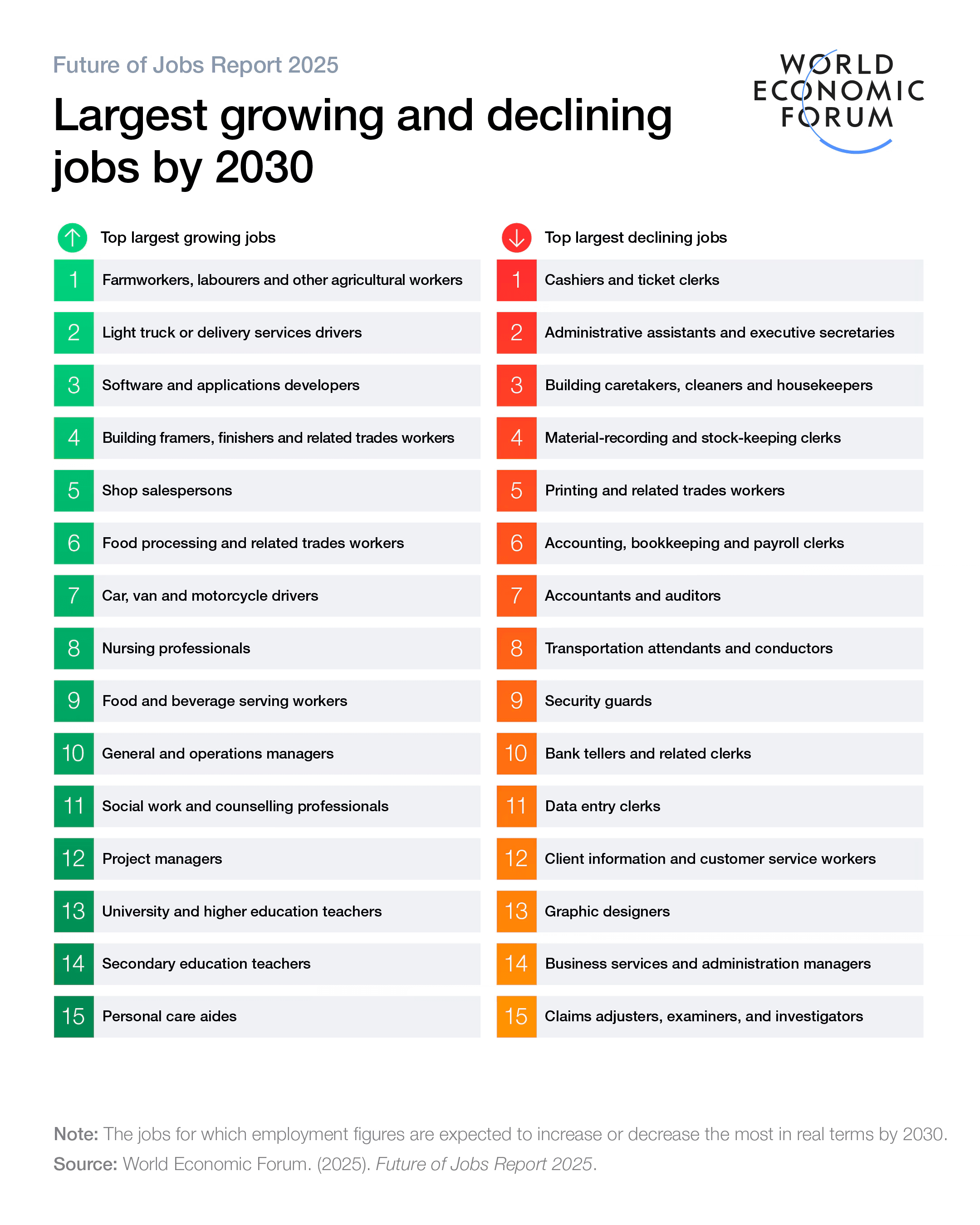
When the WEF actually lists the fastest-growing jobs by raw numbers, the top of the list is farmworkers, delivery drivers, software developers, construction workers and shop assistants. Care work, nursing and teaching are all growing fast on the back of ageing populations. The green transition alone is expected to create 34 million additional jobs by 2030. You cannot run any of these from a data centre in Virginia.
Spread it across geographies and the case gets stronger, not weaker. The messier the market, the larger the human residue, and the longer it stays unautomatable. AI performs best where processes are standardised, data is clean, rules are clear, and feedback loops are fast. African infrastructure markets often offer the exact opposite: patchy data, fragmented regulation, constrained grids, currency volatility, land complexity, informal decision pathways, and deep trust gaps between developers, offtakers, lenders, governments and communities. That is frustrating. It is also a moat. In frontier markets, value is not just knowing the answer. Value is knowing why the official answer will not work.
The strange return of communication
Here is the part people underestimate.
AI is making writing cheaper. It is not making communication easier. Those are different things.
We are about to drown in grammatically correct nonsense. Every company will have newsletters. Every founder will have thought leadership. Every analyst will submit polished memos. Every student will produce essays with suspiciously balanced paragraphs and exactly three recommendations.
The average sentence will improve. The average meaning may collapse.
This is precisely why communication becomes more valuable, not less. When everyone can generate words, the scarce skill becomes knowing what must be said, what must not be said, what matters, what is noise, what the audience actually fears, and how to move a person from confusion to clarity. Communication is not grammar. Communication is judgment under social conditions. It is translation between worlds. Technical to commercial. Commercial to legal. Engineer to client. Boardroom to site. Local reality to global capital.
AI can summarise a meeting. It cannot always tell you that the client’s silence after slide fourteen meant the FX escalation clause just killed the deal. It can write a proposal. It cannot sit across from a CFO in Accra, Lagos, Abidjan or Nairobi and feel the room shift when currency risk enters the conversation. It can generate a schedule. It cannot understand that “we will revert shortly” means seven different things depending on who said it, in what tone, on what day, and whether procurement was copied.
That skill is going to be priceless.
Energy is not safe. It is necessary
I do not want to romanticise my sector. Energy is not immune. A great deal of what junior analysts do today will be compressed. Solar yield estimates, first-pass financial models, tariff sensitivities, PPA summaries, market scans, policy briefs, due diligence checklists, even parts of technical review. AI will touch all of it. Some tasks will disappear. Some teams will shrink. Some mediocre work will no longer justify a salary. That is uncomfortable, and it is true.
But energy has one enormous advantage. It lives in the physical world.
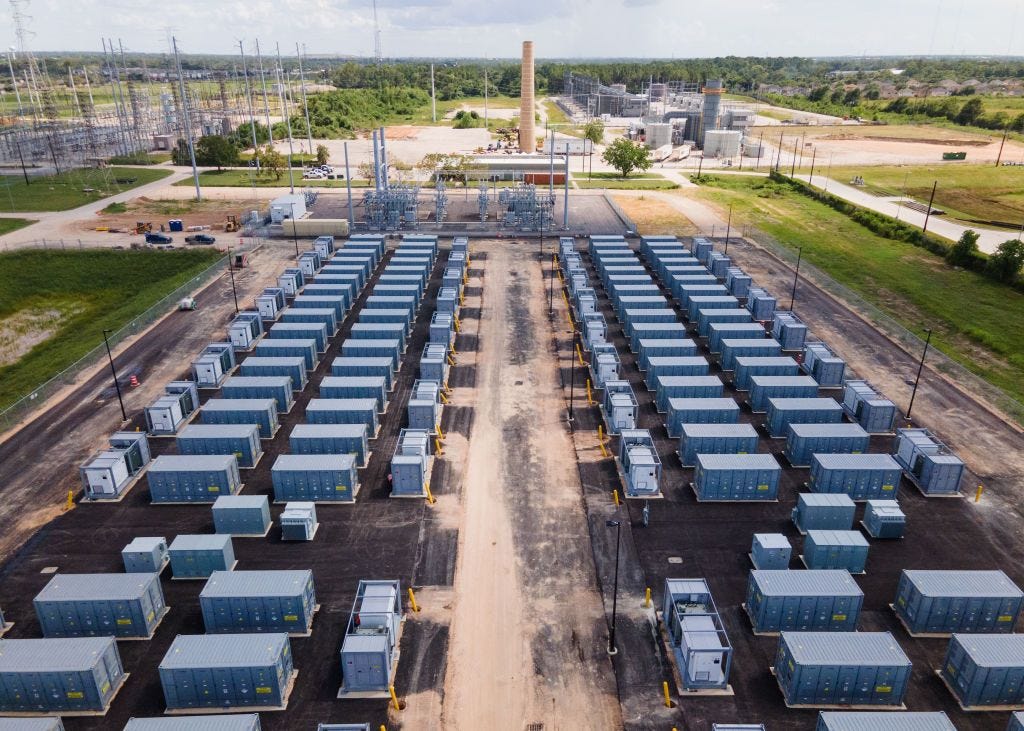
You cannot prompt a transmission line into existence. You cannot fine-tune a substation. You cannot run a factory on a slide deck. You cannot hallucinate electrons into a smelter, a data centre, a hospital, a brewery, a cement plant or a cold room.
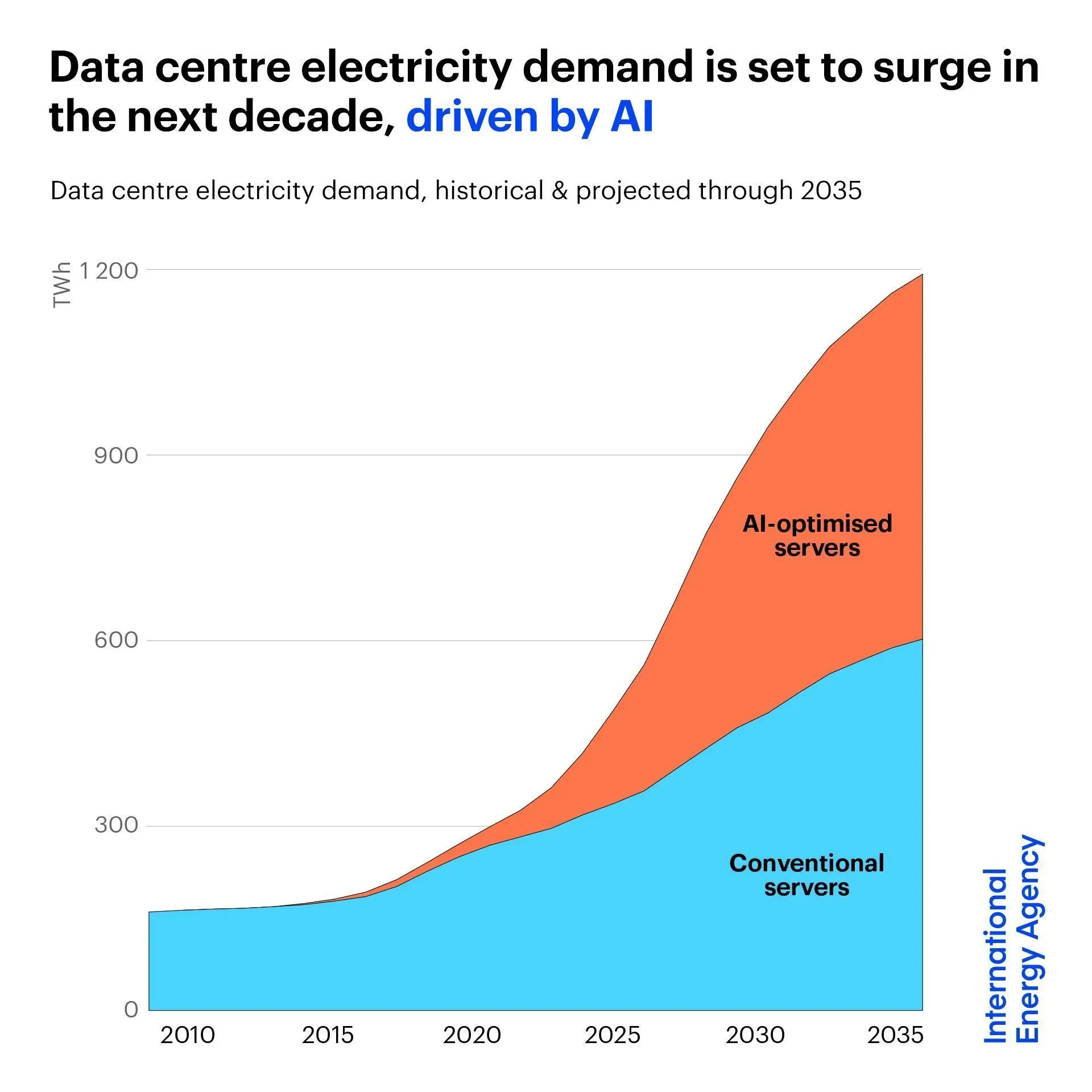
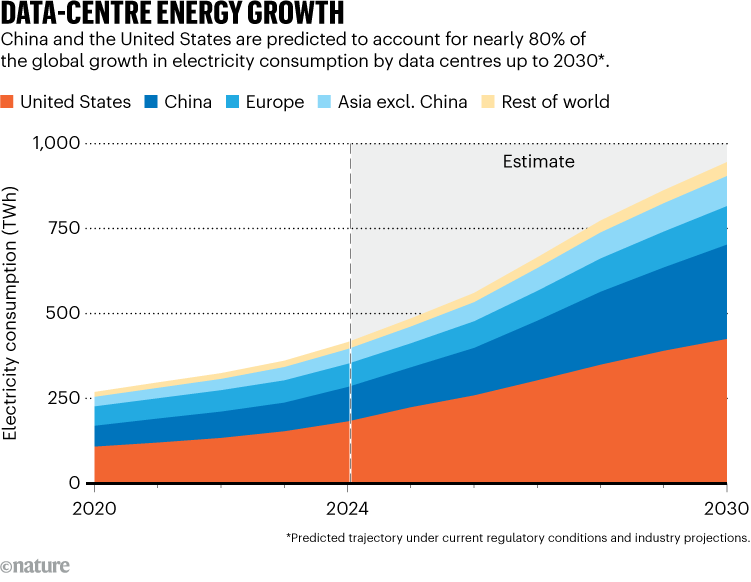
And the demand is structural. Every single thing AI does runs on electricity, and the industry is desperately, structurally short of it. The IEA projects that global data-centre electricity consumption will more than double to around 945 terawatt-hours by 2030, slightly more than Japan’s entire consumption today, with AI as the most important driver. In the United States, data centres are on course to account for nearly half of all electricity demand growth between now and 2030, consuming more power for processing data than for manufacturing aluminium, steel, cement and every other energy-intensive good combined. The most valuable companies in the world, sitting on the most capital in history, are bottlenecked by the thing my industry builds.
Energy is the binding constraint on the entire intelligence economy. That is the small, enormous win for my sector.
And the human residue here is huge. The IEA’s latest count puts global energy employment at 76 million people in 2024, growing nearly twice as fast as the wider economy, with the electricity sector now the single largest employer in energy for the first time, overtaking fuel supply, and solar PV the principal driver. Renewable energy employment specifically reached 16.6 million in 2024. And here is the kicker for a young African engineer: more than half of the energy companies the IEA surveyed reported critical hiring shortages that are already delaying projects, with the worst gaps in applied technical roles. The sector is not short of demand. It is short of people. And of those millions of jobs, Africa held only about 324,000, on a continent where nearly 600 million people still have no electricity and Mission 300 is racing to connect 300 million by 2030.
The gap between the work that must be done and the people who can do it is the single best place to plant a career I can think of.
This is the paradox I keep coming back to. AI may reduce labour demand in parts of the economy, but it increases electricity demand in the physical one. And electricity demand creates real work. Not just coding work. Grid planners. Protection engineers. Solar installers. Battery engineers. SCADA specialists. Cooling engineers. Project financiers. Permitting experts. Community engagement leads. O&M technicians. Energy lawyers. People who can stand between capital, technology, regulation and dust, and somehow produce a working asset.
That last sentence is basically the job.
A practical guide for the young engineer who wants to come into energy
I promised something more useful than a TED talk. So here is the guide I wish someone had handed me earlier. Ten things.
1. Build a real engineering base, then refuse to stop there. Do the electrical, mechanical or chemical degree. Understand the difference between kW and kWh so deeply that it irritates you when people misuse them. Learn AC and DC, three-phase power, transformers, inverters, switchgear, protection, harmonics, power factor, fault levels and load profiles. Learn solar PV properly: irradiation, degradation, clipping, losses, yield, performance ratio. Learn batteries: C-rate, depth of discharge, round-trip efficiency, augmentation, why the economics are always messier than the LinkedIn posts. Learn thermal energy too, because industry runs on heat, not just electricity. And learn grids, because transmission and distribution are becoming the real bottleneck. AI can help you learn faster. It cannot give you intuition unless you wrestle with the fundamentals yourself.
2. Become dangerous with Excel, Python, and AI tools, in that order. I know you want to skip straight to AI. Do not. Excel is still the native language of infrastructure finance. Learn to build a clean model: inputs, assumptions, calculations, outputs, sensitivities, debt sizing, DSCR, IRR, NPV, tariff build-up, FX. Then learn Python for scale: data cleaning, simulation, optimisation, forecasting. Then layer AI on top as pure leverage. Use it like a brilliant intern who sometimes lies confidently, because that is basically what it is. Let it draft, summarise and check. Never let it own the judgment.
3. Learn project finance earlier than you think you need to. Energy projects do not happen because the technology is beautiful. They happen because someone can pay for them. Learn how money enters a project and how it leaves. Equity, debt, development capital, construction risk, offtaker risk, currency risk, security packages, guarantees, termination payments. Understand why a project with great engineering can be unbankable, and why a project with average technology but strong risk allocation closes. If you can speak engineering and finance, you become useful fast. Add law, and people start inviting you to meetings they probably should not.
4. Go to site as early as humanly possible. Do not become a PowerPoint engineer. The site will humble you. You will learn that the satellite image lied. That the roof has leaks nobody mentioned. That the “24/7 operation” has seasonal shutdowns. That the generator logs are handwritten by someone who has run that plant for seventeen years and knows it better than your model ever will. That “available land” can mean land that is available politically, legally, culturally or spiritually, and these are not the same thing. Wear the boots. Ask the stupid questions without arrogance. Touch reality.
5. Pick a technical-commercial niche before you go broad. “Interested in renewable energy” is not a skill. Choose a wedge. Commercial and industrial solar, where factories are paying three to five times too much for diesel and the economics are survival, not virtue. Or mini-grids and the off-grid frontier. Or storage. Or industrial heat. Or data-centre power strategy. Go deep enough to explain the technology, the economics, the risks, the business model, the regulatory barriers and the main players. Before depth, breadth is just vibes. After depth, breadth is power.
6. Learn to write like someone’s money depends on it, because it does. A confusing memo can delay an approval. A vague risk register can hide a fatal issue. A lazy proposal can make a serious company look unserious. Write clearly. Short sentences when needed. State your assumptions. Separate facts from estimates. Explain uncertainty instead of hiding it. Tell the reader what decision they need to make, and make it easy for a busy person to understand a complex thing without feeling stupid. That skill alone will carry you absurdly far.
7. Develop commercial empathy. Engineers often think clients buy the best technical solution. They do not. They buy the solution they understand, trust, can afford, can approve internally, can defend to their board, and can operate without embarrassment. A CFO sees risk differently from an engineer. A plant manager sees downtime differently from a sustainability officer. A lender sees every ambiguity as a future default. A community sees land, jobs and promises. Learn to translate between those realities. It is not manipulation. It is respect for other people’s constraints.
8. Understand AI’s energy demand specifically. If you want to be relevant in energy this decade, understand data centres. Uptime tiers. Redundancy: N, N+1, 2N. Power usage effectiveness. Cooling loads. Grid connection queues. Behind-the-meter generation. Hourly matching versus annual matching, and why “100 percent renewable” can mean very different things depending on the accounting. The data-centre client does not just want cheap power. They want reliable, scalable, clean, bankable, redundant power that supports absurd load growth without becoming a regulatory scandal. That is a career.
9. Study regulation like it is the deal, because it is. In energy, regulation is not paperwork. It is market architecture. Can you sell power directly to a customer? Can you wheel electricity across the grid? Can tariffs be denominated in dollars? Can a captive plant serve multiple offtakers? Can a distribution company block your project? A single rule can decide whether a business model exists. Engineers who understand regulation outperform engineers who only understand equipment.
10. Build public proof of thought. This is one reason I write, even when I am clearly unqualified and emotionally compromised by football. Writing forces thinking, and public writing creates proof. You do not need to go viral. Please do not make going viral your strategy; it is spiritually dangerous and usually embarrassing. But explain one concept a week. Break down a project. Review a policy. Share what a site visit taught you. Over time, people learn how you think, and in a world where everyone can claim skills, visible thinking becomes a credential.
The uncomfortable bit for schools
All of this means our schools may need to change faster than they want to. We keep training young people for a world where information scarcity is the main problem. Information is no longer scarce.
Attention is scarce. Judgment is scarce. Taste is scarce. Courage is scarce. Clarity is scarce. The ability to ask a good question is scarce. The ability to work with people across difference is scarce. The ability to sit with ambiguity without becoming useless is scarce.
So yes, learn mathematics, physics, engineering, economics, programming, writing and history. But more importantly, learn to think across them. The world’s hardest problems do not arrive neatly labelled. Climate change is not just environmental science. It is energy, finance, politics, justice, technology, land and time. Energy access is not just generation capacity. It is grids, tariffs, governance, affordability, fuel logistics, metering, currency and trust. The people who can connect the dots will matter. The people who can explain the dots will lead.
If I had to compress everything into one line, it would be this:
Domain depth, plus AI leverage, plus communication, plus judgment, plus trust, equals durable value.
Not perfectly future-proof. Nothing is. But resilient. Domain depth means you know something real. AI leverage means you move faster than the people refusing the tools. Communication means others can use your thinking. Judgment means you know when the model is wrong, when the client is afraid, and when the answer is technically correct but practically useless. And trust, the one that matters most, is earned through repeated usefulness, honesty and clarity under pressure. AI can generate information. It cannot automatically generate trust. The future will not belong to people who simply “know AI.” Everyone will know AI. It will belong to people who can combine AI with real-world competence and human trust.
The part where I do not wrap this up neatly
Maybe this is where Arsenal comes back in.
Football is a strange teacher because it is both irrational and brutally data-driven. You can dominate the expected goals and still lose. You can build for years and still watch one penalty fly over the bar. You can end a twenty-two year wait to be champions of England and still go to bed grieving a Champions League final eleven days later.
Progress and pain can arrive in the same week.
That feels like the labour market right now. AI is progress and AI is pain, both at once. It will create companies, tools, medicines and possibilities we cannot yet imagine. It will also delete roles, compress careers, expose shallow competence, and make some people feel like the ladder was pulled up just as they reached it. Both things are true. Anyone selling only optimism is lying. Anyone selling only doom is also lying. The honest place is harder. It says: learn the tools but do not worship them. Build technical skill but do not hide inside it. Study your field but do not become narrow. Communicate clearly but do not become performative. Go fast but touch reality.
I genuinely do not know how long “for now” lasts. I do not know what happens to GDP if the intelligence layer keeps thinning out the middle of the labour market faster than new work appears. I do not know whether the net 78 million jobs show up where the displaced 92 million used to be, or somewhere else entirely, leaving a generation stranded in the gap. I do not know if my own kids, hypothetical and otherwise, will one day read this essay the way I now read “just learn to code.”
But I will tell you the one thing I have stopped doubting. The people who navigate this, both the energy transition and the intelligence one, will not be the ones who found the safe field. There is no safe field. They will be the ones who went deep on something real, learned to think clearly and explain themselves, picked up the new tools without being seduced by them, and refused to look away from the hard questions even when the answers were not ready yet.
Twenty-two years we waited. Then we won, and then we lost on penalties after a coin toss, both inside eleven days, and the lesson was the same in the triumph and the heartbreak. You do the deep work for years. You control what you can control. You make your peace with the margins you cannot. Then you keep going.
Think. Build. Negotiate. Explain. Judge. Earn trust. Stand on site. Read the room. Connect the dots. Turn complexity into action.
That may be the last human advantage. And for now, it is still ours.
It is past five somewhere. Pick your hard thing. Do not go back to sleep.
I’m Kay. These are my honest, sleep-deprived, slightly heartbroken thoughts from someone who does not know enough but refuses to stop asking. I would love to hear yours.
Wrong about energy so you don’t have to be.
P.S. I researched this piece using google and AI tools, including the one that helped me check the layoff numbers, which is a bit like asking the arsonist to hold your fire extinguisher. The irony is never lost on me.
P.P.S. To the young engineers specifically: learn the fundamentals, learn the tools, learn to write, go to site, and please, for the love of all that is holy, know the difference between kW and kWh.
P.P.P.S. To the Arsenal fan who is also asking me for career advice, here is a free combined lesson. Build a squad with depth, master your set pieces, and accept that sometimes you do everything right and still lose to a German scoring in the sixth minute. Wait. He scored for us. I am very tired. Good night. Good morning.
Sources
Arsenal Premier League champions, first title in 22 years: Premier League; ESPN
Champions League final, PSG beat Arsenal on penalties: ESPN match report; Olympics.com
Anthropic 965 billion dollar valuation, eclipsing OpenAI: Bloomberg; founding and growth: VentureBeat
Alphabet ~16 years from 2004 IPO to a 1 trillion dollar market cap (Jan 2020): CNBC
US private AI investment 285.9 billion dollars, global corporate AI investment 581.7 billion dollars (+130%): Stanford HAI 2026 AI Index
2026 hyperscaler AI capex ~725 billion dollars, exceeding Switzerland’s GDP: AL Capital Advisory
AI capex outpacing all consumer spending in US GDP growth (H1 2025): KKR
Larry Page “willing to go bankrupt”: IEEE ComSoc Technology Blog
SpaceX targeting ~1.75 trillion dollar IPO; Ron Baron’s 10 to 30 trillion dollar projection and orbital data-centre reasoning: Invezz; Benzinga
AI capex is capital-intensive, not labour-intensive: Real Investment Advice
142,000 tech layoffs in 2026, profitable companies cutting to fund AI: Tech Times; Oracle cuts: Tech Insider; Meta cuts: TechSpot
AI as the leading cited reason for US job cuts: Trading Economics / Challenger, Gray & Christmas
Amodei on entry-level white-collar jobs: Axios; Jevons Paradox reframing: Fortune
IMF’s Georgieva on AI as a labour-market “tsunami” (60% advanced economies, 40% globally): Business Today
Software developers aged 22 to 25 employment down nearly 20% since 2024; one-third of organisations expect workforce reductions: Stanford HAI 2026 AI Index, Economy chapter
WEF Future of Jobs Report 2025, skills and net job projections: WEF press release; fastest-growing jobs and skills; digest
Global data-centre electricity demand to ~945 TWh by 2030, nearly half of US electricity demand growth: IEA, Energy and AI; executive summary
Global energy employment 76 million in 2024, electricity now the largest employer, critical hiring shortages: IEA, World Energy Employment 2025
Renewable energy jobs 16.6 million in 2024: IRENA; Africa’s ~324,000 renewable jobs: IRENA
~600 million Africans without electricity and Mission 300 progress: Mission 300 / fundsforNGOs