

Last week Forbes dropped its 2026 AI 50 list. A day after I finished reading it, Anthropic launched Claude Design. Figma closed that Thursday down roughly 7%. Adobe dropped about 2.7%. Wix and GoDaddy had already taken smaller hits earlier in the week, when the launch was first leaked. The entire design industry had about four hours to process what just happened.
And honestly, I am still processing it.

Let me tell you what Anthropic has shipped since February. Somewhere between 74 and 120 product releases in roughly ninety days, depending on whose list you trust.
A new flagship model. Then a better one. Then a cybersecurity model that found a bug hiding in OpenBSD since the year Windows 98 came out, which is to say since before some of you were potty-trained. Then Claude Managed Agents, a product that turned the business plans of several hundred AI agent startups into a checkbox in somebody else’s pricing tier, practically overnight. Then a desktop agent called Cowork that reads your files, drafts your emails, and now pairs with your phone so you can text it tasks from the train. Then an Excel and PowerPoint integration that builds your decks and pivot tables for you. Then Claude Design, which does most of what Figma does from a sentence.
Anthropic’s annualised revenue run rate went from $9 billion last December to over $30 billion this April. Their valuation is $380 billion. Their IPO is rumoured for October. Their chief product officer resigned from Figma’s board on 14 April, three days before the tool dropped, which is the corporate equivalent of breaking up with someone via their LinkedIn profile.
I read all this on the train and laughed. Then I read it in the shower and did not laugh. Then I read it a third time on Sunday with coffee, and realised I had been smiling nervously at my phone for about forty minutes.
The Forbes 50 is genuinely impressive. Lovable. Cursor. Harvey. Runway. Perplexity. Suno. Decagon. Cognition. $305.6 billion raised between fifty companies. OpenAI alone accounts for $182.6 billion of that, which is nearly four times the entire annual federal budget of Nigeria for 2026. For one company. To build one thing. Which also happens to write better emails than most of my cousins.
Every company on that list is doing something that would have looked like witchcraft in 2019, for the very reasonable price of putting about a hundred million people out of a job.
And here is what bothers me about the list.
Nobody on it looks particularly happy.

Something is going quietly wrong with the startup dream right now and nobody wants to say it at dinner.
A $100 million exit used to be the dream. Paul Graham sold Viaweb for $49 million and became Paul Graham. Wordle sold to the New York Times for a low seven-figure sum and the founder went home to the rest of his life. Most of you reading this could retire on those numbers and still buy your mother a house.
In today’s market, a $100 million exit is described by VCs as a “consolation prize”. The pattern is predictable. A founder exits for $1 million and the first thing they think is, I need to start something that sells for $10 million. The one who exits for $10 million is already aiming at $100 million. The ladder climbs itself.
We do not need $10 million.
We need a reason to do something at all.
Meanwhile the ground keeps moving. A year ago your startup was building a feature. Today Anthropic shipped that feature as a checkbox. Your investors are now on a call explaining that actually $500 million is the new floor, which is a bit like being told the game has moved from chess to chess-but-the-board-is-a-helicopter. The rules changed. You did not. The goalposts moved because somewhere in San Francisco a man named Dario shipped something on a Tuesday.
This is not greed. It is not the economy. It is physics.
The ground under the numbers got softer, and we all kept measuring.
Here is the harder thing. For most of human history there was a wall. On one side, people who made things. On the other side, people who used the things. Designers made the website. Coders made the app. Writers made the book. Lawyers drafted the contract. Everybody else paid for the output.
That wall is being dismantled in real time. Lovable lets anyone build an app by describing it. Cursor turned coding into a conversation. Runway turned video into a prompt. Suno turned songwriting into a sentence. Claude Design turned prototyping into a paragraph your aunt could write. Literally. Somebody’s aunt is about to prototype a catering app this weekend, call it Mama Something Kitchen, and refuse to accept edits.
For the person who always wanted to make something and did not know how, this is a gift.
For the person who spent twenty years learning to code or design or draft or compose, it is something more complicated. Call it grief. Call it opportunity. Call it whatever helps you sleep. The wall was a moat. The moat is gone. The ducks have notes.
Will I still have a job?
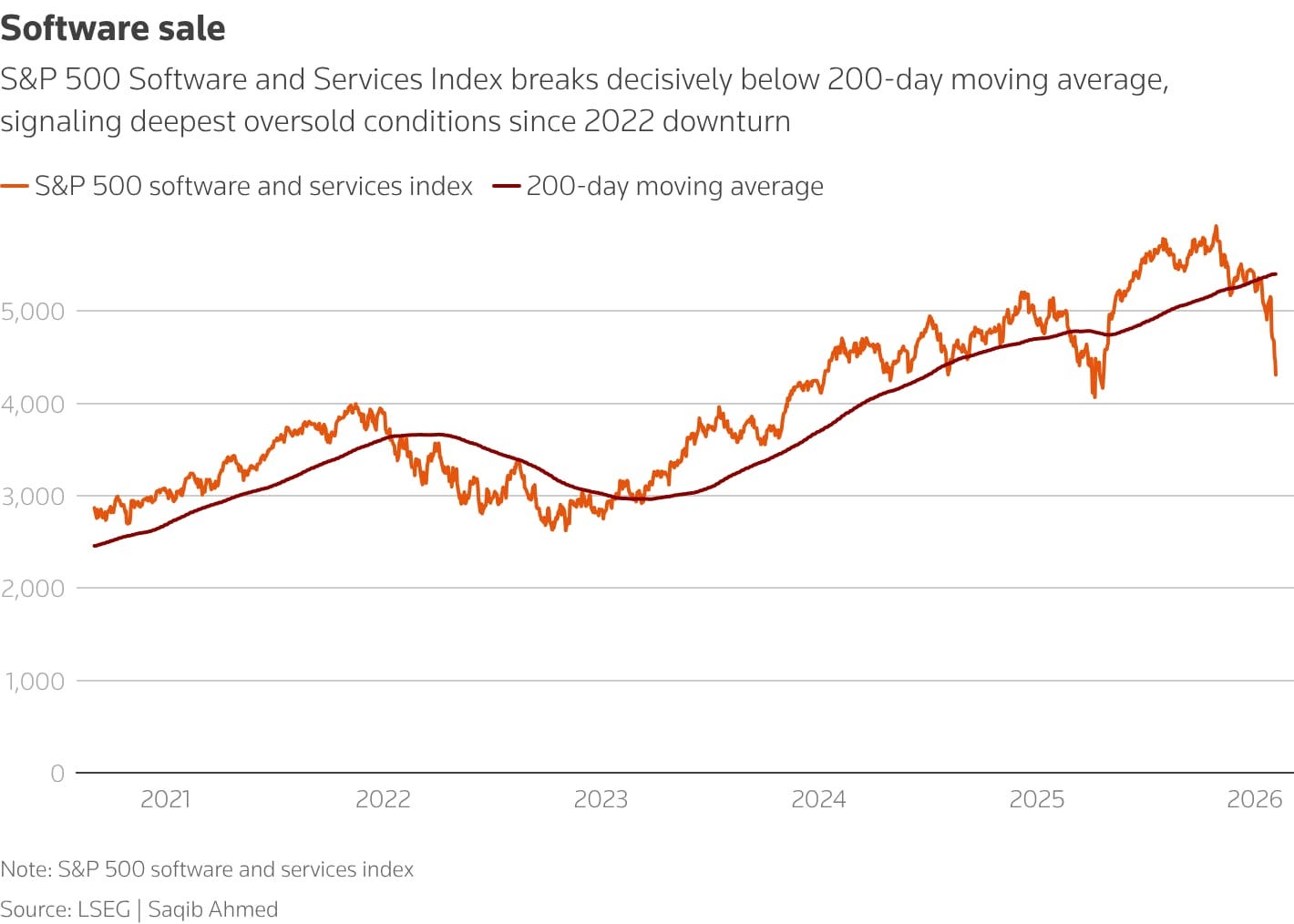
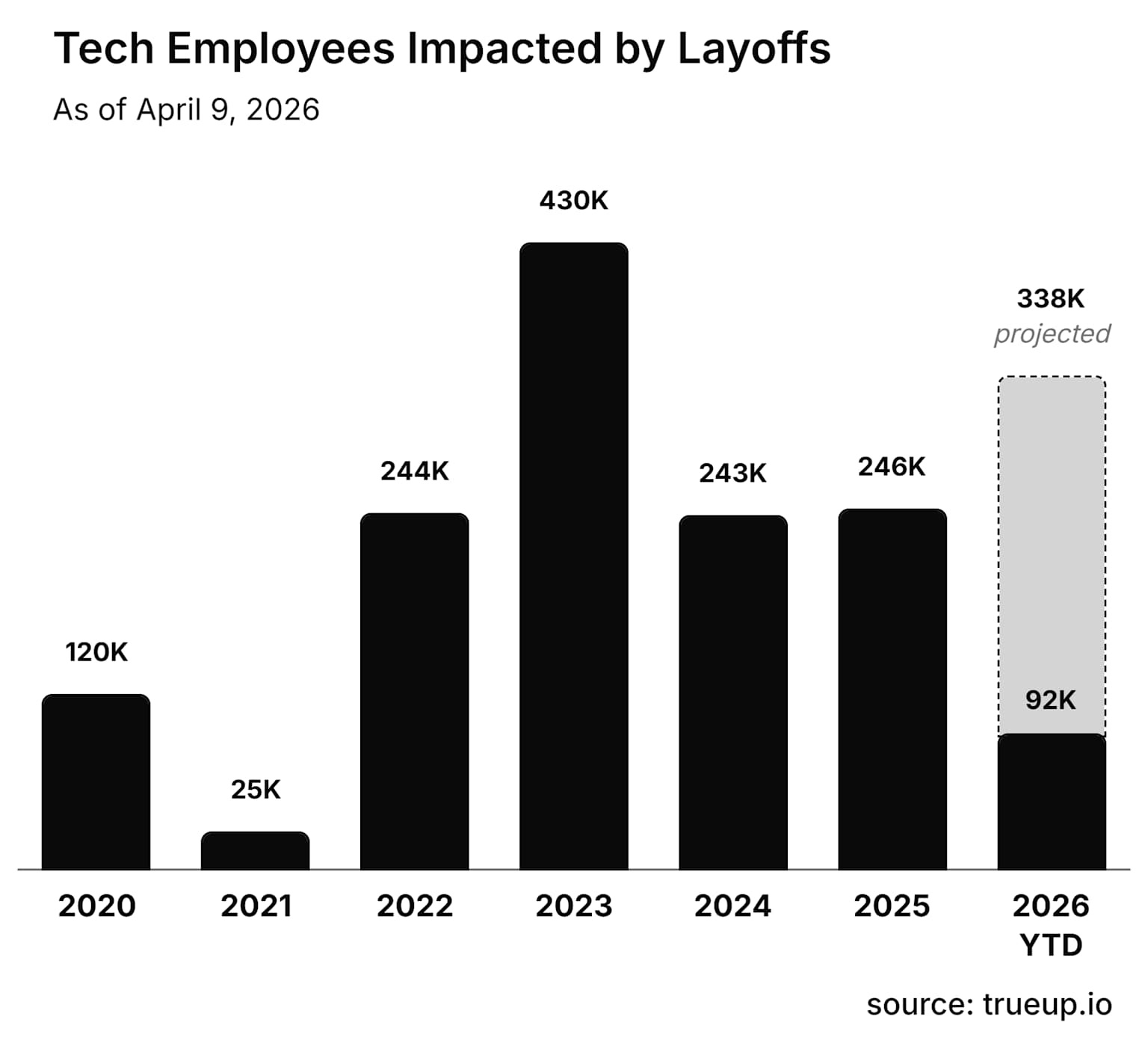
Tens of thousands of tech workers have been cut this year already, and we are not yet at Easter. Meta announced 10% layoffs for May 20. Block, Snap and Atlassian all blamed AI efficiency like it was a weather event. Figma has lost more than 80% of its post-IPO peak value. Atlassian, a company whose entire business is collaboration software, just posted its first-ever decline in enterprise seat count. Workday, whose entire business is managing other people’s workforces, quietly laid off 8.5% of its own. Intuit is down 33%. Salesforce is down 40%. Adobe is down 30%. Thomson Reuters fell 16% in a single day when Claude Cowork launched legal plugins. IBM had its worst single-day drop since 2000 the week Anthropic released Claude Code for COBOL modernisation.
The SaaS industry ran on per-seat pricing for twenty years. AI agents do not need seats.
Here is the interesting counter-story. When Anthropic launched its HR plugin in February, the tech world waited for Deel to sweat. Instead Alex Bouaziz, Deel’s CEO, posted something on X that I have not been able to stop thinking about. Anthropic’s engineers, he noted, could probably build an HR system in three weeks. And yet Anthropic itself uses Workday. Why? Because the hard part of HR is not the software. It is carrying the legal and compliance liability when somebody in Romania gets their payroll wrong and the labour inspector shows up. Anthropic is not going to become an employment law firm in 150 countries. The moat is boring.
Boring, it turns out, is often the moat.
The honest answer to will-I-still-have-a-job is: probably yes, if you are willing to become something adjacent to what you currently are. The jobs that survive will not be the ones that were hardest to automate. They will be the ones that were hardest to explain. If you can write down exactly what you do in a single document, a model will probably do a decent version of it by Christmas. If you cannot, you are safer than you think.
That is not a comfortable truth. It is just the one I keep landing on.
So what do you actually do on Monday morning.
Here is what I have landed on, after a week of staring at stock charts like a mildly concussed seagull. You cannot out-ship Anthropic. You cannot out-raise OpenAI. You cannot be more efficient than a model that works while you sleep and does not ask for PTO. If you spend your life trying, you will lose, because the scoreboard is not yours, the game is not yours, and the numbers on it are decided by a 26-year-old in Menlo Park whose therapist has not seen him in three months.
The move, as far as I can tell, is to stop measuring yourself with somebody else’s ruler. Pick a small thing. Do it well. Do it tomorrow. Do it the day after.
Write the paragraph. Finish the meeting properly. Call the friend you have been avoiding. Read the book instead of the feed. Cook the meal. Put your phone in another room. Say no to the thing you do not want to do. Say yes to the thing you have been putting off for six months.
None of this will tank anyone’s stock.
None of this will make Forbes.
But it is the only work that compounds in a direction that matters, which is toward a version of yourself you might actually like when you are sixty.
The next time somebody asks me what I think about AI eating the world, I am going to tell them this. The world is not being eaten. It is being reorganised. A lot of people are losing jobs. A lot of people are getting superpowers. Most of us are doing both at once and pretending neither is happening. The companies on that Forbes list will keep breaking things faster than we can adapt. The stocks will keep moving. The goalposts will keep moving. The wall will keep falling.
And tomorrow morning, somebody is going to wake up, ignore the three news alerts about which billion-dollar company just bought which billion-dollar company, and spend an hour on something that nobody is going to pay them for. A book. A letter. A walk. A conversation. A half-decent idea about how to be a slightly better version of themselves next Tuesday.
They will be winning.
Most of us would be, if we noticed what the game actually was.
• • •
P.S. I wrote most of this while watching Figma’s stock chart do a waterfall impression, and I realised halfway through that I was checking the chart more than I was writing the essay. I put the phone in another room. The essay got finished. That, I think, is the whole point.
P.P.S. I promised myself I would not use Claude to write a single word of this. Not as a principled stand. More like: if I am going to sit in judgement of an industry, the absolute minimum is that I type my own nonsense.
I like what you said about focusing on work that compounds in a direction that matters to us. 👌🏿
"The face of a man who is very sorry about your startup. He is not sorry" 😀